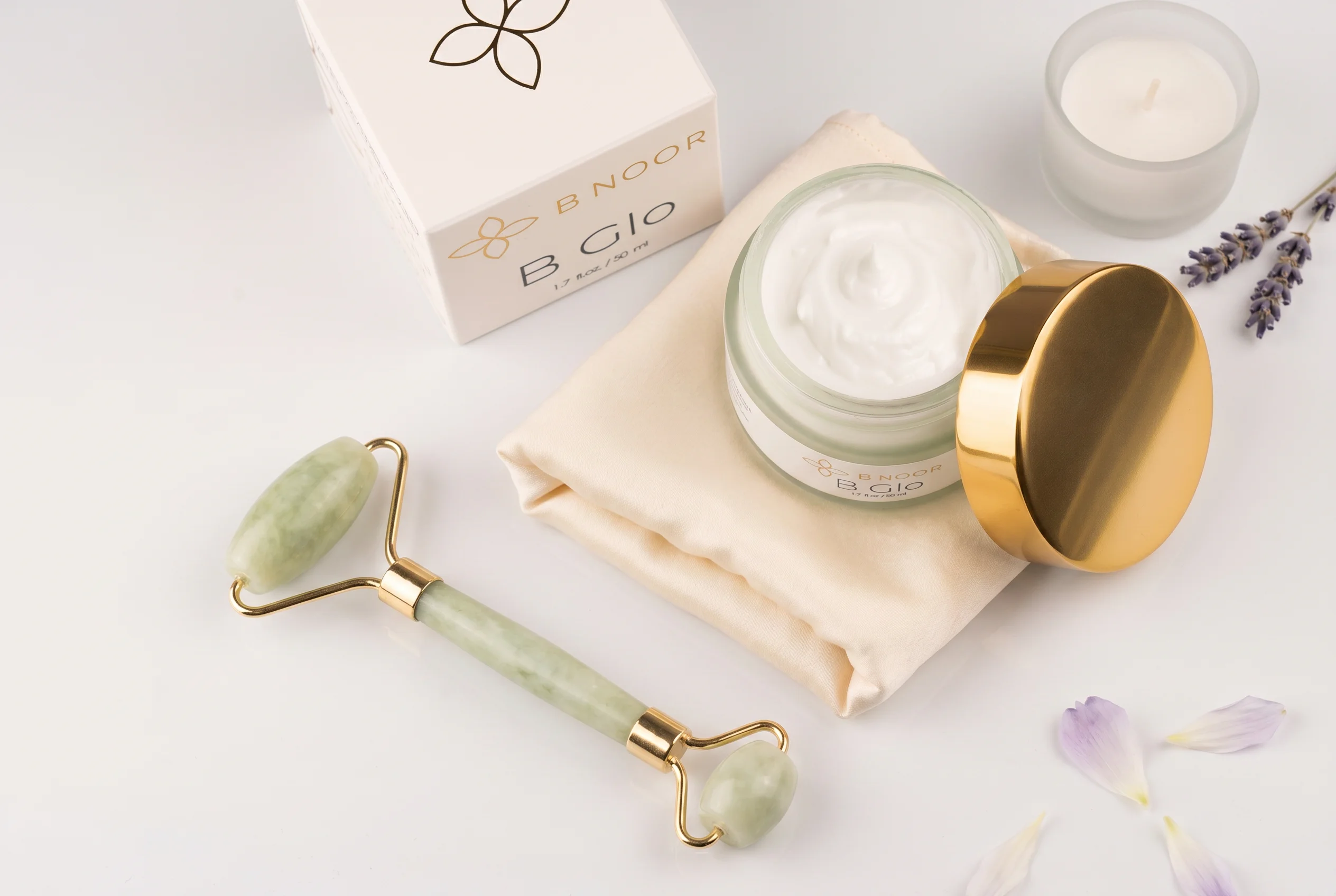
Vitamin B5 and Hyaluronic Acid: The Hydration Combination Your Moisturizer Needs
Vitamin B5 and hyaluronic acid are two of the most studied hydration ingredients in modern skincare. Used together, they do something neither can do alone.
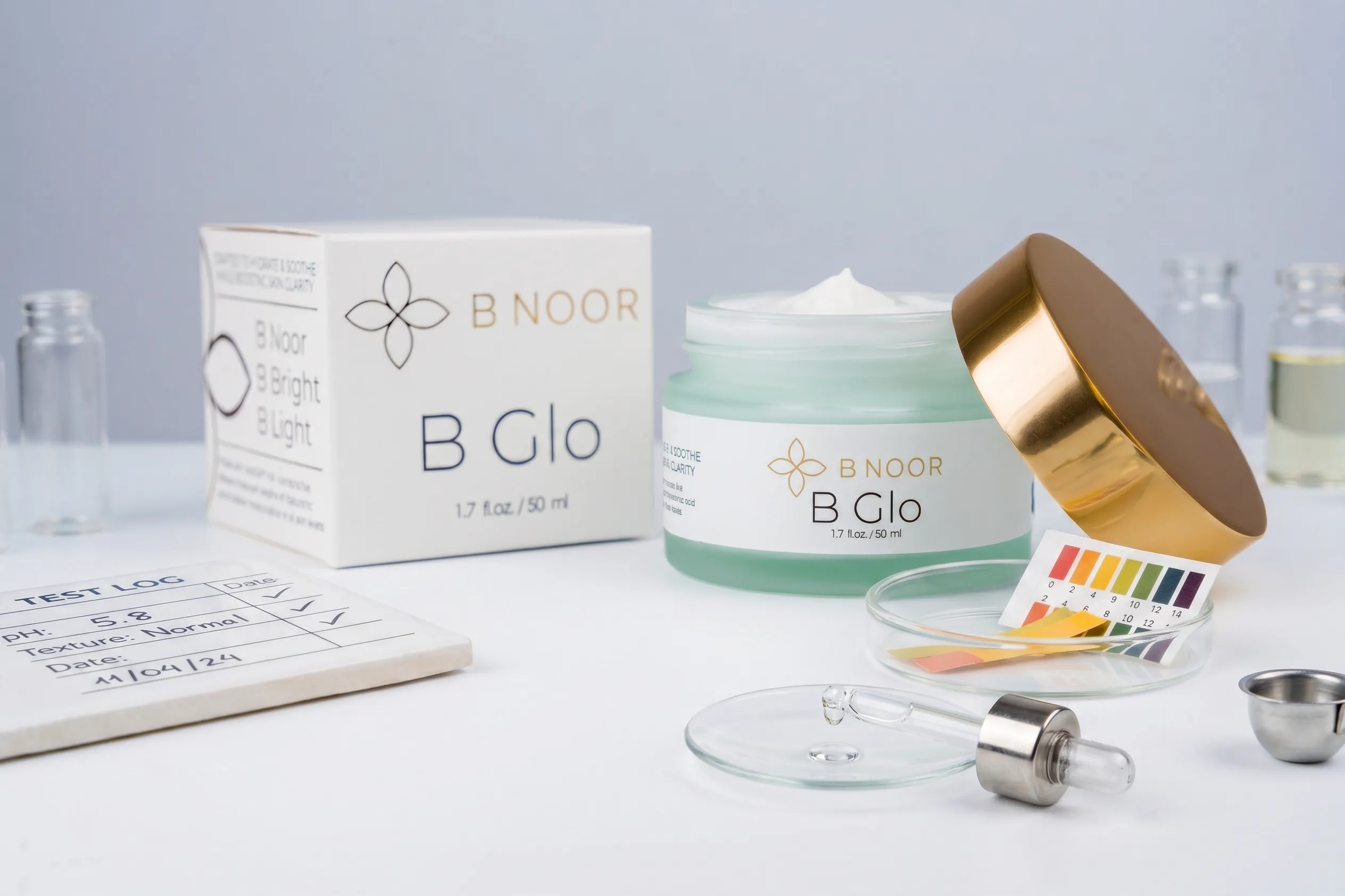
This is the combination built into B Glo — and here is the science behind why it works.
What Vitamin B5 (Panthenol) Actually Does
Panthenol — the form of vitamin B5 used in skincare — is a provitamin. When it penetrates the skin, it converts to pantothenic acid, a compound the skin uses to synthesize and repair its own cells.
The practical effects are well-documented: panthenol reduces transepidermal water loss, accelerates wound healing, reduces redness and inflammation, and strengthens the skin barrier over time. It is one of the few ingredients that simultaneously hydrates and repairs.
How Hyaluronic Acid Works Alongside B5
Hyaluronic acid is a humectant — it draws water to itself and holds it. A single gram of HA can hold up to six litres of water. Applied to skin, it pulls moisture from the air and from deeper tissue layers into the epidermis.
The problem with humectants used alone in dry climates: if there is not enough ambient humidity, they can draw moisture from the deeper dermis toward the surface and then lose it to evaporation. The skin ends up more dehydrated than before.
Vitamin B5 solves this. By strengthening the skin barrier and reducing transepidermal water loss, it creates a seal that keeps the moisture HA attracts from escaping. They work in sequence — HA fills the reservoir, B5 locks the lid.
The Repair Benefit Most People Miss
Beyond hydration, this combination accelerates the skin's natural repair cycle.
Panthenol supports keratinocyte proliferation — the process by which the skin generates new surface cells. Hyaluronic acid creates the hydrated environment in which this process happens most efficiently. Together they shorten the time it takes for the skin to recover from sun exposure, sensitivity flares, or the micro-damage that accumulates from daily environmental stress.
This is why B Glo users often report that their skin feels less reactive after four to six weeks — the barrier is literally rebuilding itself with better raw materials.
How B Glo Uses This Combination
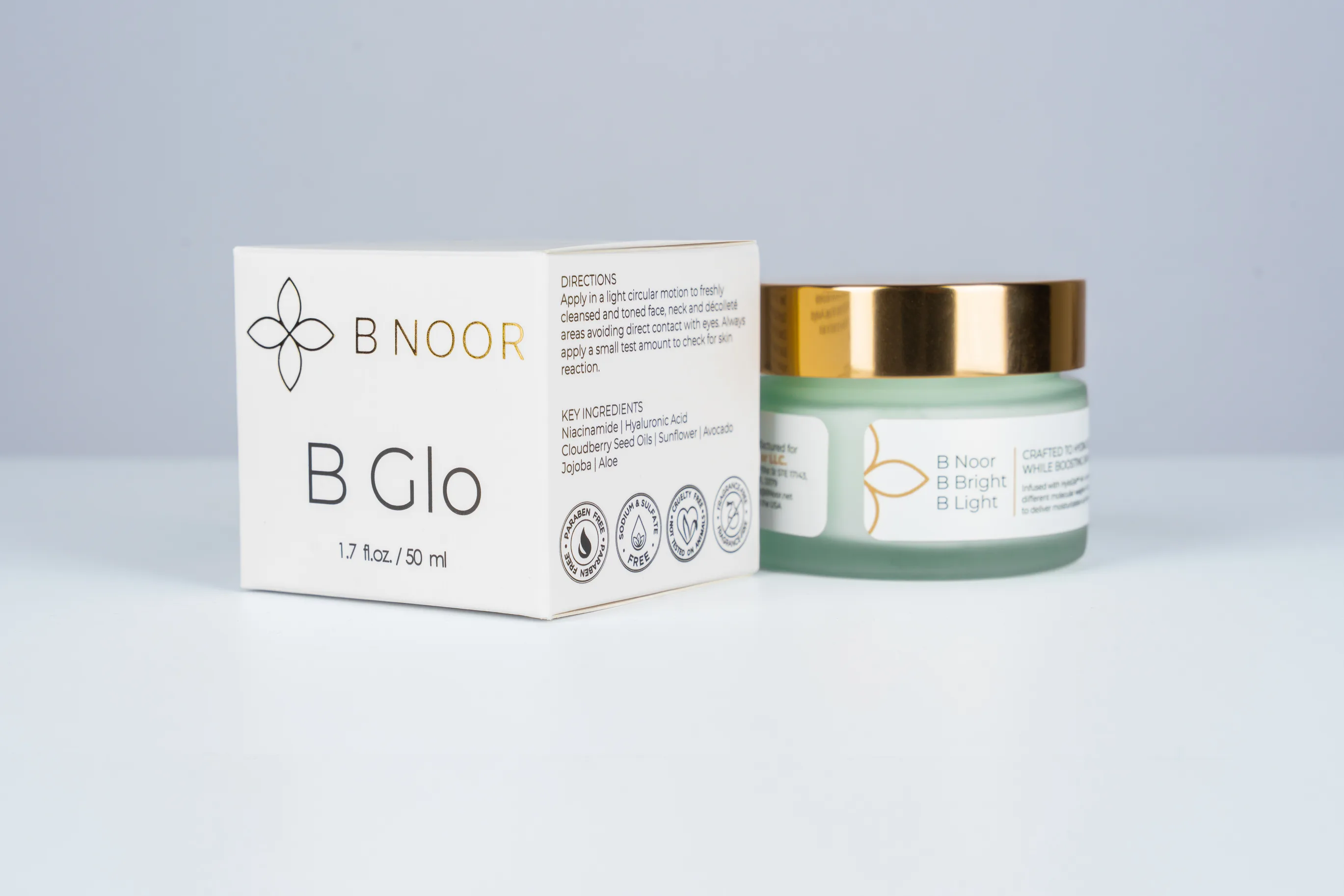
B Glo contains Panthenol (vitamin B5) alongside the five-weight HyloGlo™ HA Complex. The formulation sequence matters: the HA weights are layered to hydrate every skin depth, while the panthenol works at the barrier level to ensure that hydration stays where it belongs.
Additional barrier support comes from Tocopherol (vitamin E), which provides antioxidant protection and reinforces the lipid layer, and from organic Jojoba and Avocado oils, which mimic the skin's own sebum and further reduce moisture loss.
The result is a moisturizer that does not need to be reapplied throughout the day — because it is not just adding water to the skin. It is teaching the skin to hold water on its own.
When to Use It in Your Routine
Vitamin B5 and hyaluronic acid are both compatible with every other skincare active — acids, retinol, niacinamide, peptides, vitamin C. They do not compete with other ingredients and do not require a waiting period between layers.
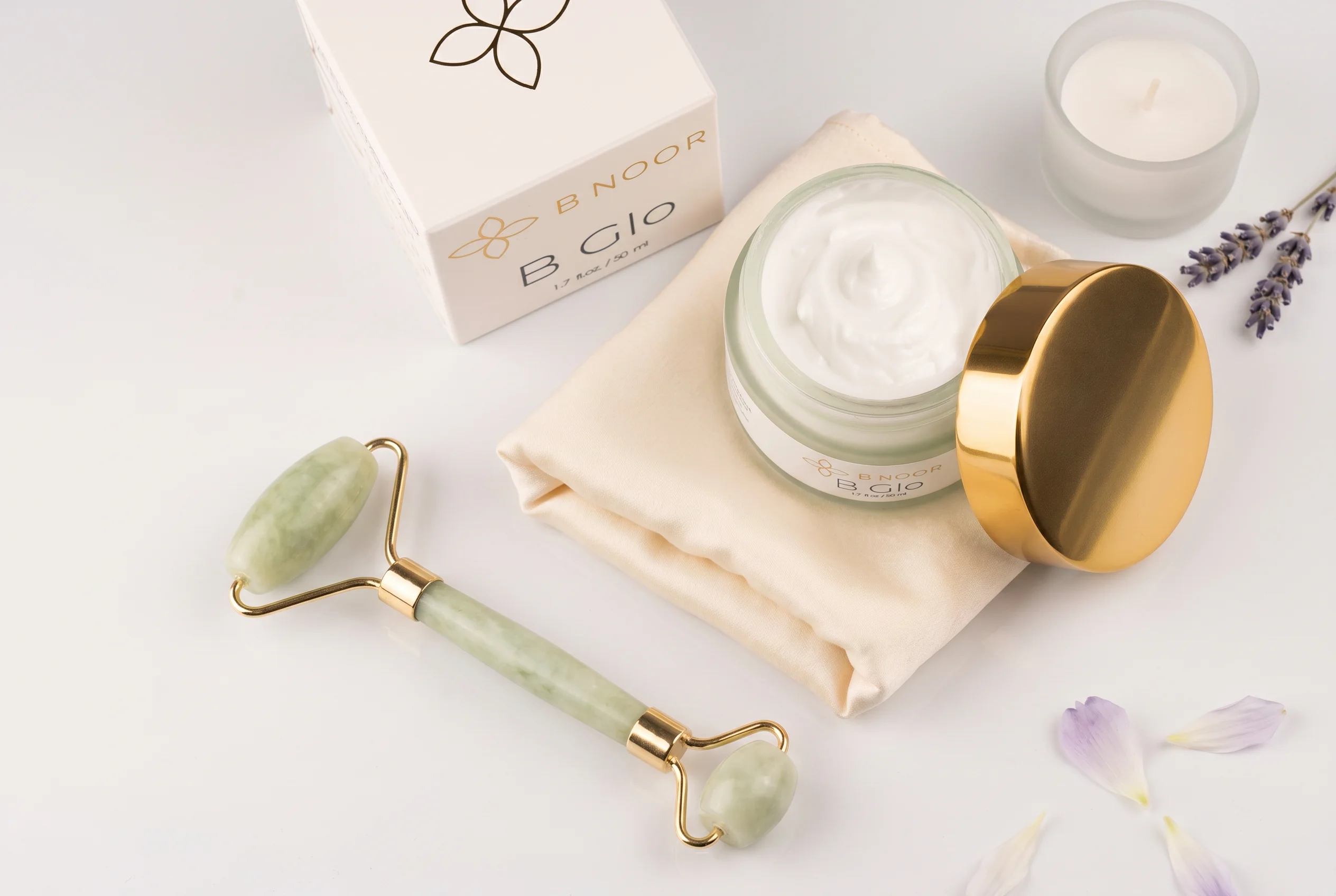
Apply B Glo after your serum step, while the skin is still slightly damp. The residual moisture on the surface amplifies HA's humectant effect and helps panthenol absorb more evenly. In the morning, follow with SPF — the barrier reinforcement from B5 works synergistically with sun protection to prevent UV-triggered hydration loss.
For best results, use consistently for three weeks. The barrier-building effects of panthenol are cumulative — the longer you use it, the stronger the seal.