Layering Skincare: Why Order Changes Everything
The order you apply skincare products determines whether they work — or whether they block each other entirely.
This is not a minor detail. It is the difference between a routine that delivers results and one that wastes expensive products.
The Rule: Thinnest to Thickest
The fundamental principle of skincare layering is simple: apply products in order of increasing viscosity. Thinner, water-based formulas go first. Thicker, oil-based formulas go last.
The reason is penetration. Lighter formulas need to reach the skin directly to be absorbed. A thick moisturizer applied first creates a physical barrier that prevents thinner formulas applied on top from penetrating. You end up with expensive serums sitting on top of a moisture layer, unable to reach their target depth.
The Morning Routine Order
A complete morning routine applied correctly:
Cleanser — removes overnight sebum and any residue. Apply to dry or damp skin, rinse thoroughly.
Toner or essence (if used) — apply to damp skin while pores are open. Pat in, do not wipe.
Vitamin C or antioxidant serum (if used) — apply to dry skin. Wait 60 seconds for absorption.
Eye cream (if used) — tap gently around the orbital bone with your ring finger.
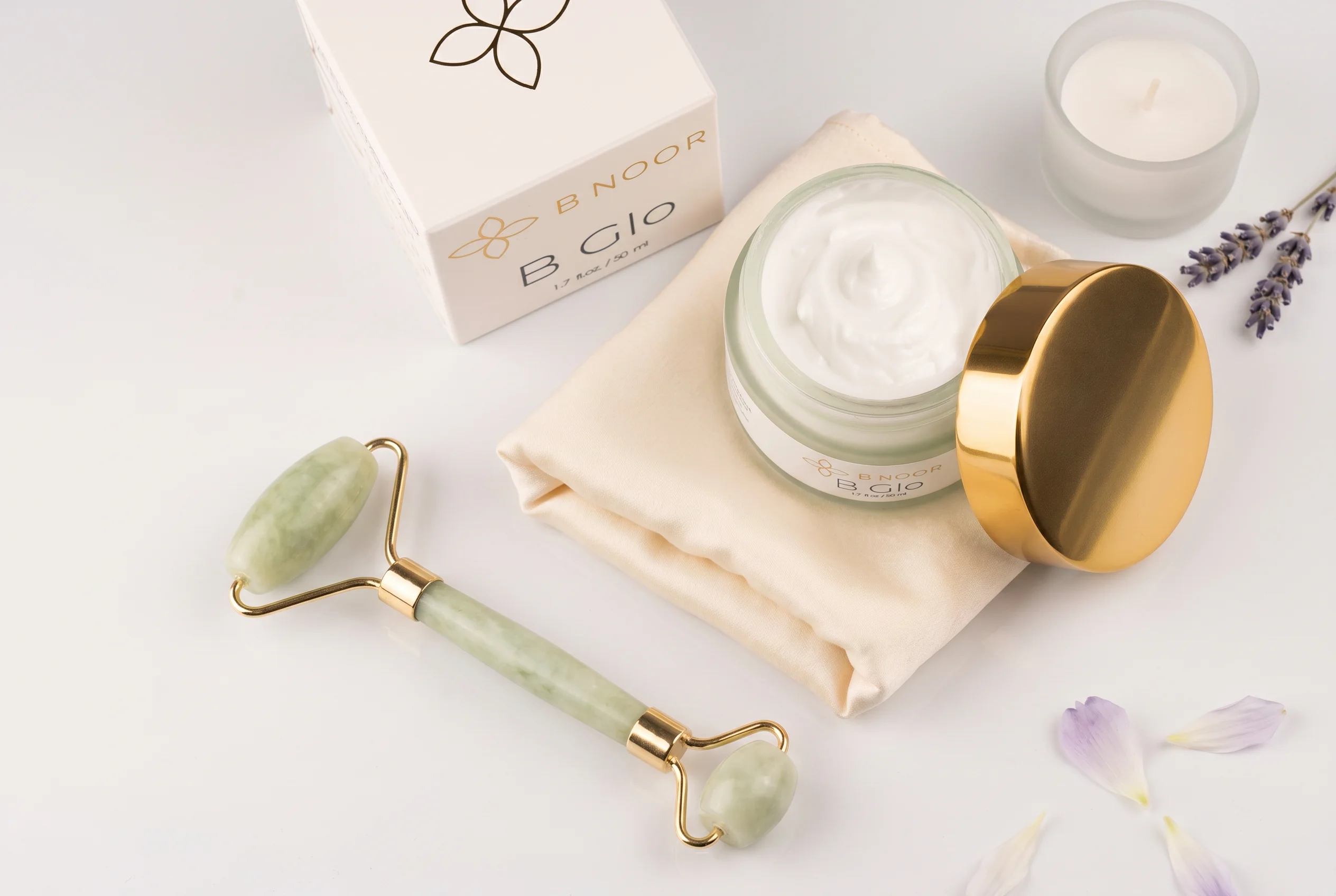
Moisturizer — apply to slightly damp skin to lock in the preceding layers. B Glo works best applied here — the residual moisture amplifies its humectant actives.
SPF — always last in the morning. Never mixed into or applied under moisturizer — it dilutes the SPF factor.
The Evening Routine Order
Evening routines can be more intensive since you are not applying SPF and the skin is in repair mode overnight:
Oil cleanser or balm (if wearing SPF/makeup) — first cleanse to dissolve sunscreen and makeup.
Gel or foam cleanser — second cleanse on bare skin for a thorough clean.
Exfoliant (2–3 nights per week maximum) — AHA or BHA applied to dry skin. Do not use on the same nights as retinol.
Retinol or treatment serum (if used) — applied after exfoliants have fully absorbed, or on alternating nights.
Moisturizer — B Glo applied as the final step seals in the treatment layers and supports overnight barrier repair. The panthenol and organic oils in B Glo work most effectively during the skin's overnight regeneration cycle.

The Ingredients That Cannot Be Layered Together
Some combinations reduce efficacy. Others cause irritation. The ones that matter most:
Retinol + AHA/BHA: Both are exfoliating and can over-sensitise the barrier when used together. Use on alternating nights.
Vitamin C (ascorbic acid) + AHA/BHA: Can cause irritation at high concentrations. Low-concentration vitamin C (under 10%) is generally fine with mild acids.
Retinol + benzoyl peroxide: Benzoyl peroxide oxidises retinol, rendering it ineffective. Never combine.
Niacinamide and hyaluronic acid have no interaction concerns — they work synergistically and can be used with virtually any other active.
When Wait Times Actually Matter
Most products do not require waiting between layers — the "60 second rule" is a practical guideline, not a biochemical necessity for most formulas.
Wait times that do matter: retinol benefits from a short wait after cleansing to ensure the skin is fully dry, as application to damp skin increases absorption and can increase irritation risk. High-concentration vitamin C serums benefit from a 1–2 minute wait before layering to allow the low-pH formula to work before the next layer normalises the pH.
For everything else: apply, pat gently, and move to the next step when the previous one no longer feels wet on the skin. Speed is not the enemy — improper order is.