
You Don't Need 12 Steps. Here's What Your Skin Actually Needs
The average skincare routine has grown from three steps to twelve over the last decade — driven more by social media than by skin science.
Here is what your skin actually needs. It is less than you think.
Why More Steps Does Not Mean Better Results
The skincare industry profits from complexity. Every new concern — dark spots, pores, dullness, fine lines — becomes an opportunity to sell a dedicated product. The result is routines so elaborate they take 20 minutes to complete and cost hundreds of dollars a month.
The problem is that skin has a finite capacity to absorb and respond to active ingredients. Piling 12 products onto the skin does not give it 12x the benefit — it often gives it irritation, barrier compromise, and active ingredients that cancel each other out. A well-formulated three-step routine consistently outperforms an overcrowded twelve-step one.
The Three Things Skin Actually Needs
Strip away the noise and there are three things every skin needs every day:
Clean — remove the day's sebum, pollution, SPF, and oxidised skin cells. A gentle, pH-balanced cleanser does this without stripping the barrier.
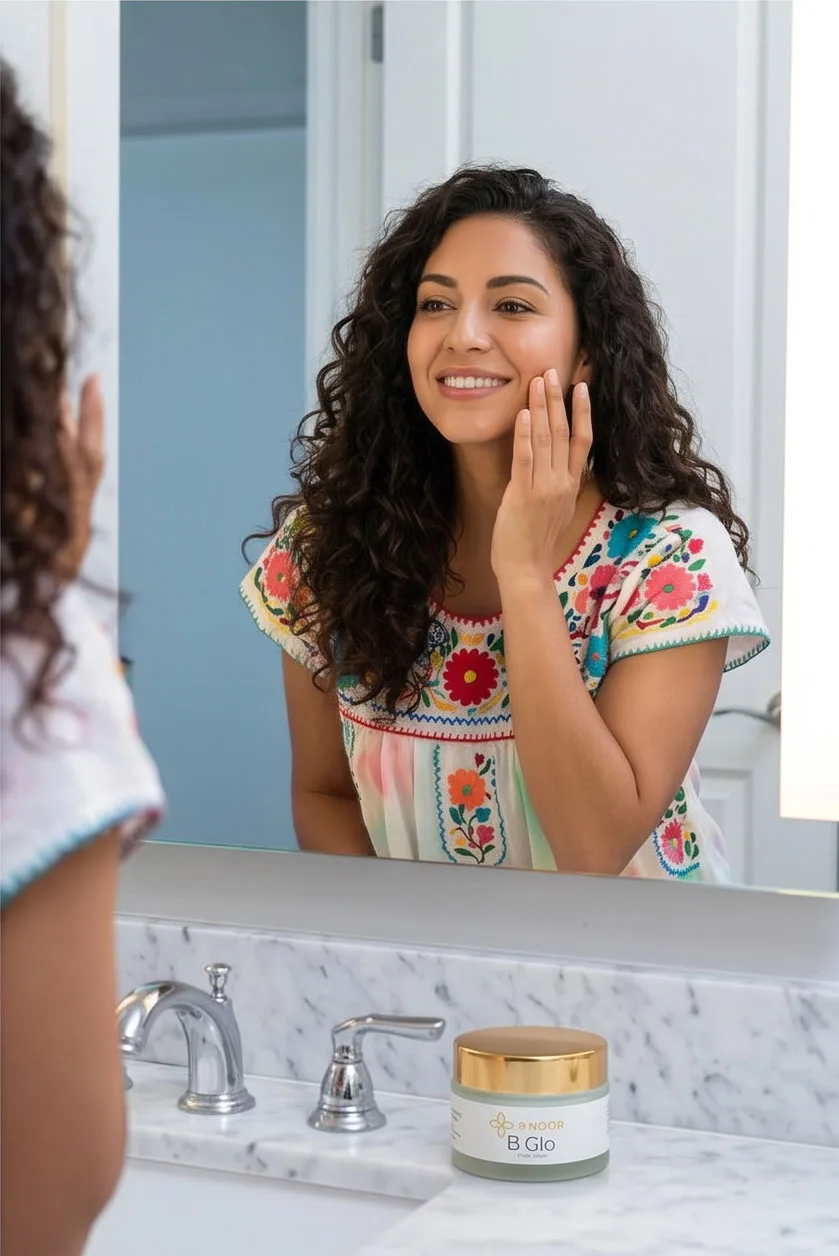
Hydrate and repair — replenish the moisture and lipids lost during the day and support the skin's overnight repair cycle. A well-formulated moisturizer with humectants, barrier-supporting lipids, and repair actives does this in one step.
Protect — in the morning, SPF is non-negotiable. UV damage is the single largest contributor to visible aging, hyperpigmentation, and skin cancer.
Everything else is optional.
What to Add If You Have Specific Concerns
If the three-step foundation is solid, targeted actives can address specific concerns:
Hyperpigmentation or uneven tone: niacinamide (in your moisturizer), or a dedicated vitamin C serum in the morning.
Texture and cell turnover: a low-concentration AHA (glycolic or lactic acid) 2–3 nights per week.
Visible aging or firmness: a retinol or peptide treatment in the evening, 3–4 nights per week.
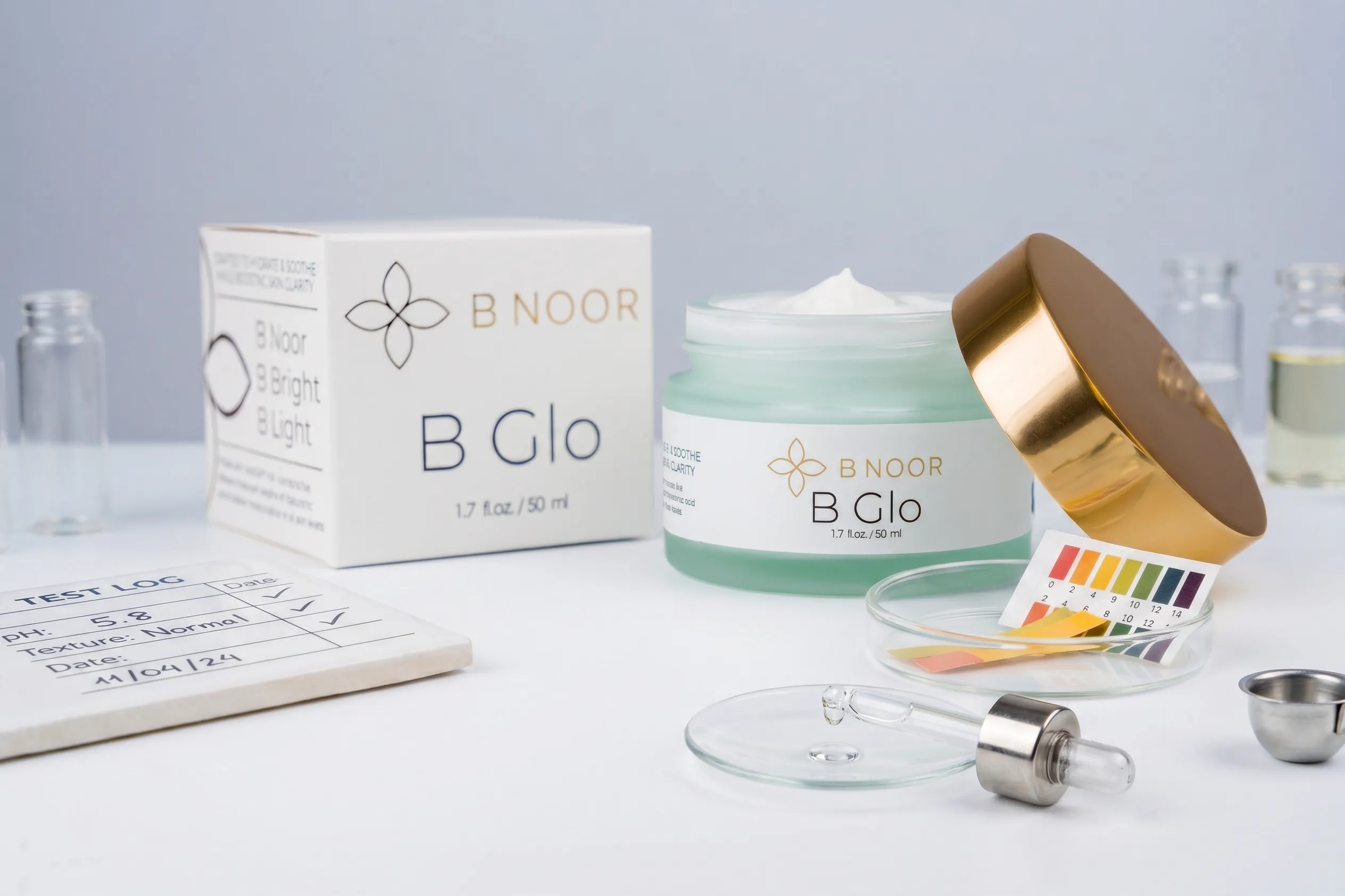
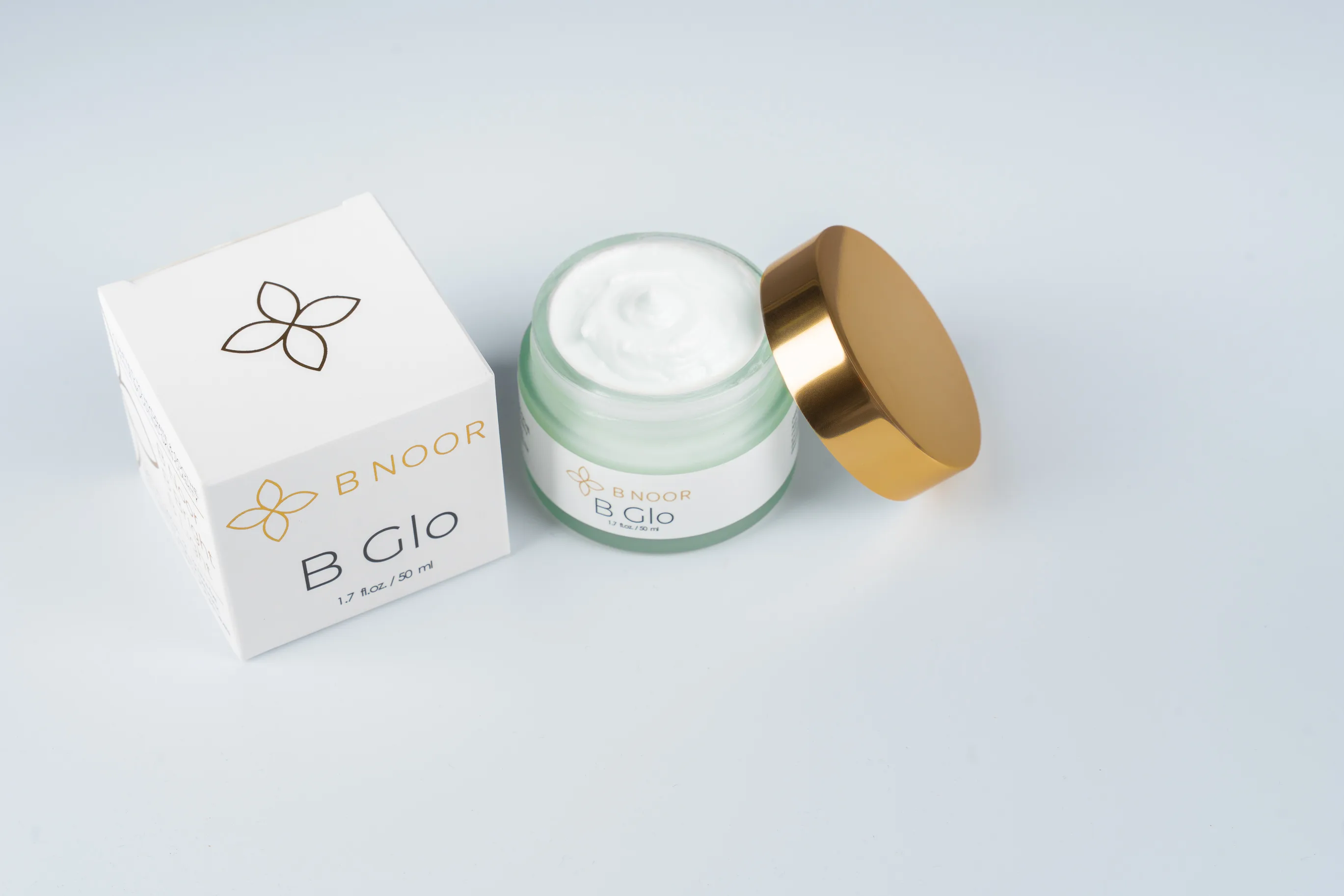
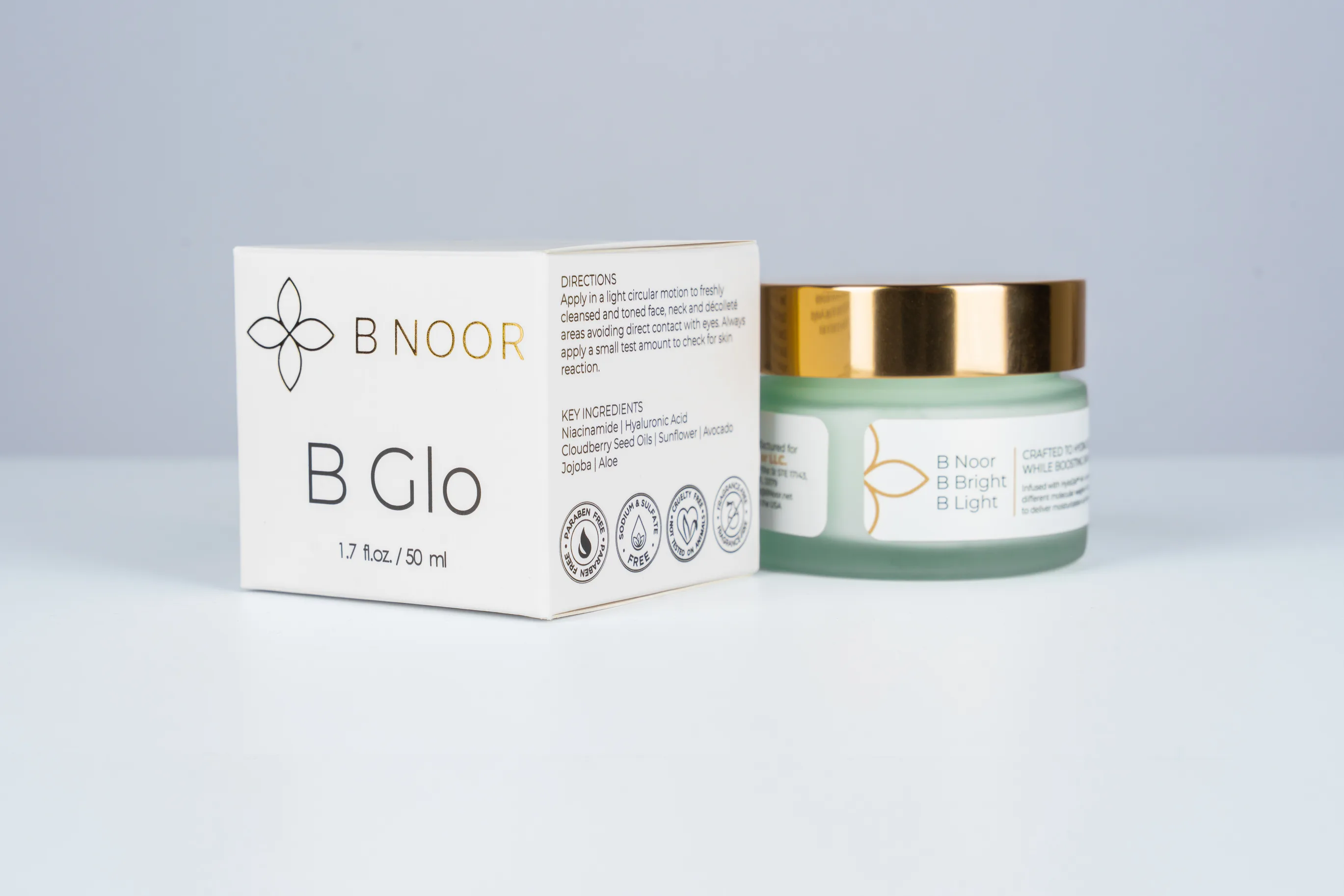
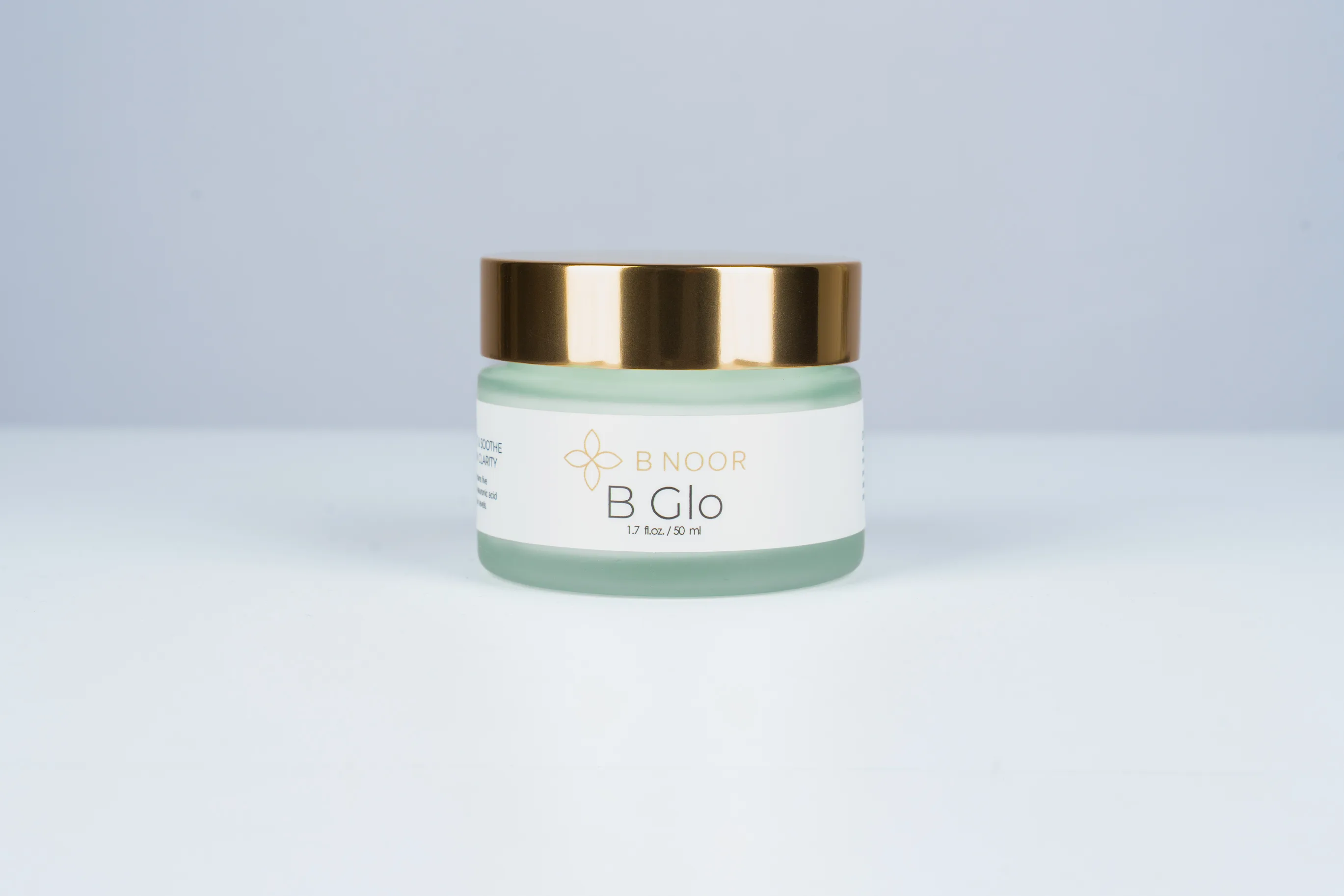
None of these require a dedicated product if your cleanser and moisturizer are well-formulated. B Glo, for example, contains niacinamide, panthenol, and a full HA complex — covering hydration, barrier repair, and tone-evening in a single step.
The Compounding Effect of Consistency
The most common reason skincare routines fail is not using the wrong products. It is inconsistency.
Skin renews itself on a 28-day cycle. Most active ingredients require 4–8 weeks of consistent use to produce visible results. A complicated routine you perform three times a week will consistently underperform a simple routine you perform every single day.
Simplifying your routine is not compromising — it is the strategy most likely to produce the consistency that drives results. Three products, every day, for six weeks, will do more for your skin than twelve products used intermittently.
Where B Glo Fits
B Glo was designed to reduce, not add to, the complexity of a routine.
A moisturizer that contains five molecular weights of hyaluronic acid, niacinamide, panthenol, vitamin E, and organic barrier-supportive oils covers hydration, barrier repair, tone-evening, antioxidant protection, and barrier lipid replenishment in a single step.
For many people, a complete and effective skincare routine is: cleanser, B Glo, SPF. That is it. That is enough. And that is the point.