Pharmacist-Formulated vs Dermatologist-Recommended Skincare: What's the Difference
The words "pharmacist-formulated" and "dermatologist-recommended" are both meant to signal trust. But they represent completely different things — and for your skincare routine, the distinction matters.
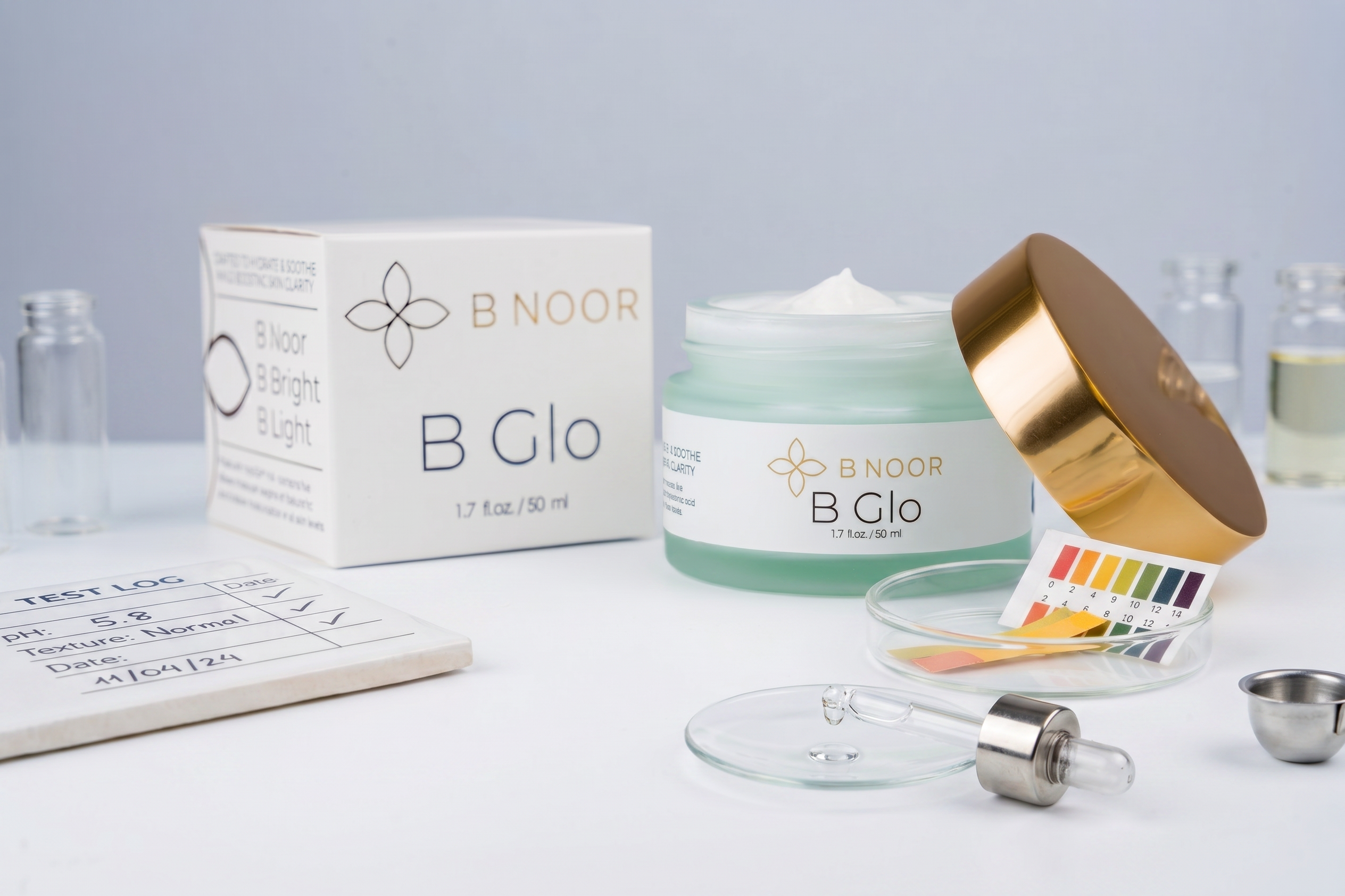
B Glo was formulated by a pharmacist. Here is what that actually means.
What a Dermatologist Does
Dermatologists are medical specialists trained in diagnosing and treating skin diseases — conditions like eczema, psoriasis, acne, melanoma, and rosacea. Their expertise is clinical: they assess, diagnose, and prescribe.
When a dermatologist recommends a skincare product, they are usually evaluating it through a lens of patient safety and absence of irritants. "Dermatologist-tested" often means the product was used by a small panel of dermatologists and none of them observed adverse reactions. It is a safety floor, not a quality ceiling.
Many mass-market brands pay for "dermatologist-tested" labelling. It does not mean the formula was built by a dermatologist — it means a dermatologist confirmed it did not cause visible harm.
What a Pharmacist Brings to Formulation
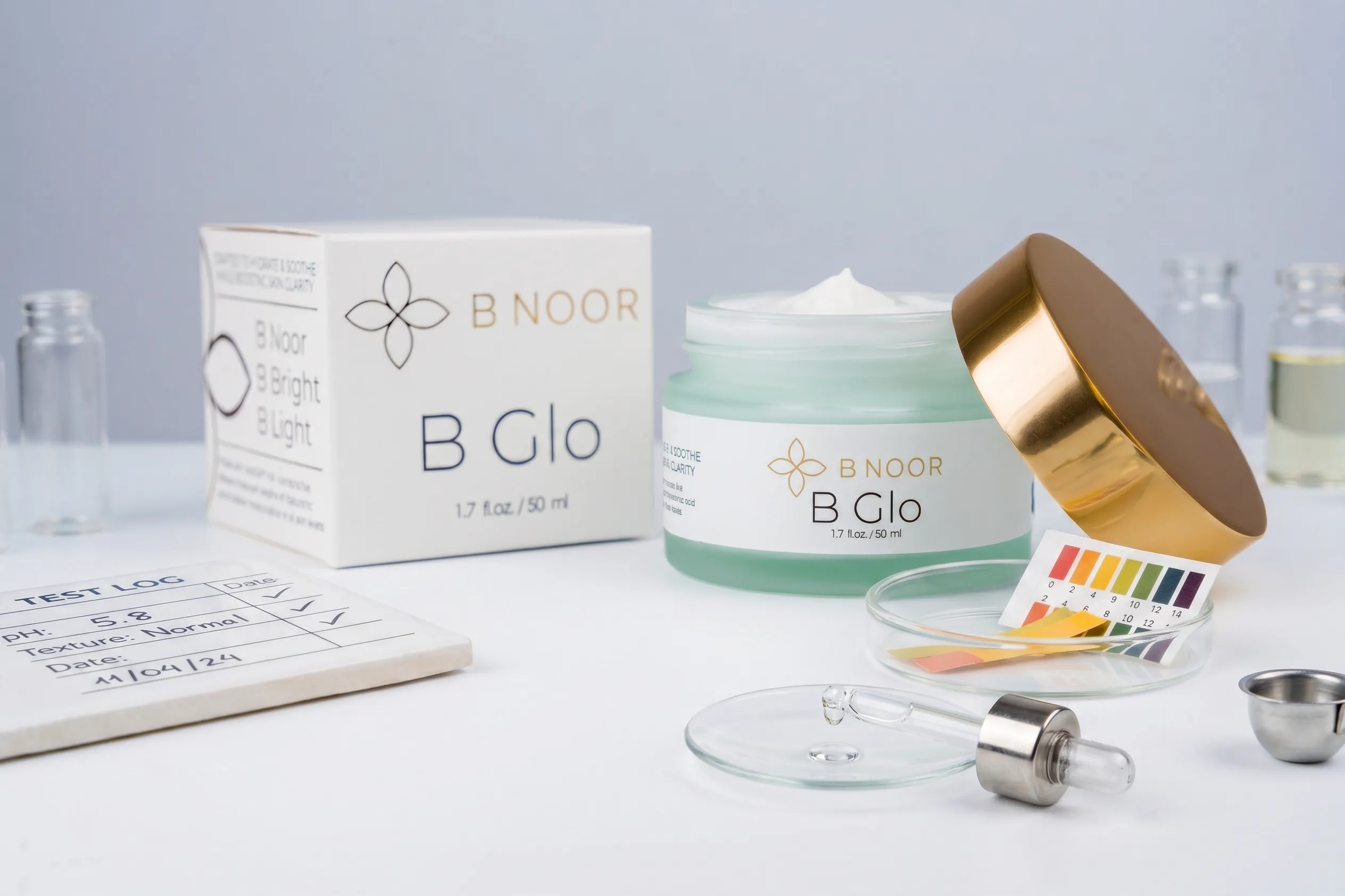
Pharmacists are trained in pharmaceutical chemistry — the science of how active compounds behave in delivery systems. This includes bioavailability (whether an ingredient actually reaches its target), stability (whether the formula degrades over time), and interaction profiles (whether ingredients enhance or neutralize each other).
A pharmacist building a skincare formula thinks about molecular weight, pH compatibility, preservative systems, and how each ingredient behaves across the range of skin types and conditions it will encounter. They are not starting from a marketing brief and working backward to a formula. They are starting from the science and working forward to a result.
The Difference in Practice
Consider hyaluronic acid. Most moisturizers include it because consumers recognize the name. A pharmacist formulating with HA asks: what molecular weight is most bioavailable for the skin layers I want to reach? Does the molecular weight in my formula actually penetrate, or does it sit on the surface? Is the concentration calibrated to humectant benefit without drawing moisture away from the dermis in low-humidity environments?
These are not questions that arise in marketing meetings. They arise in pharmaceutical chemistry training.
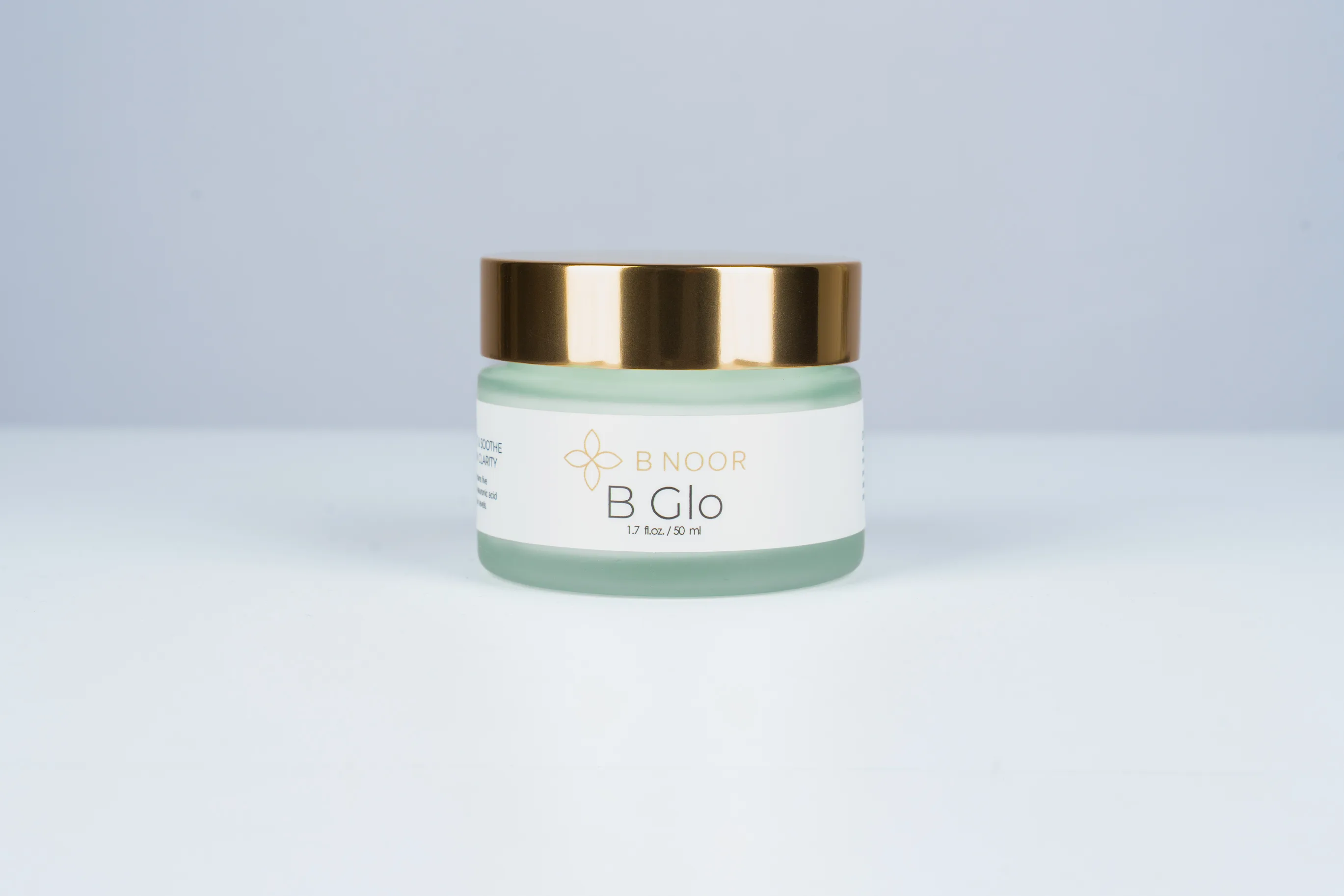
B Glo uses five molecular weights of hyaluronic acid — not because five weights is a marketable number, but because that is the approach that addresses hydration at every skin depth. The formula was designed around function, then refined for elegance.
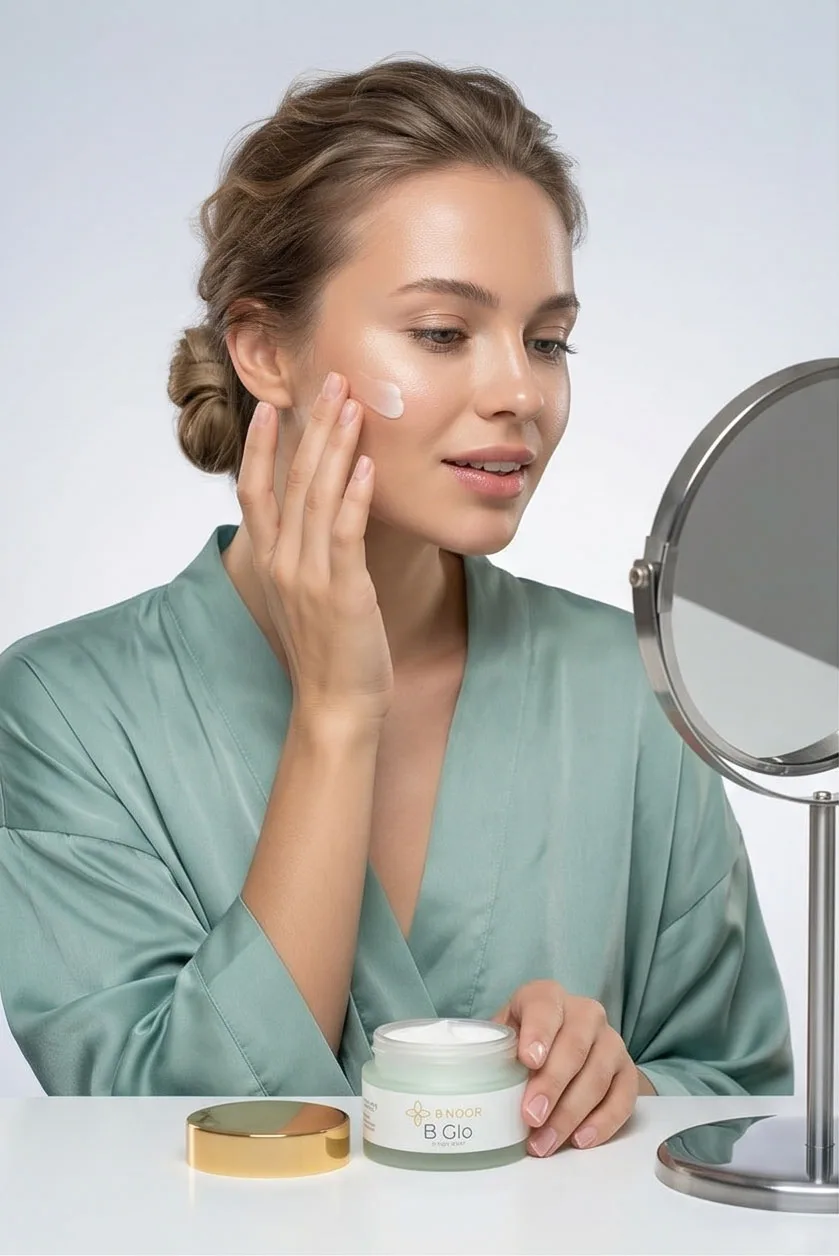
Tested on Us First — Always
B NOOR does not launch a product until it works on the founder's skin first. This is not a marketing claim — it is a protocol.
The pharmacist-founder's skin is the first test subject and the last approval gate. If the formula does not produce visible results on skin that the formulator knows intimately — its sensitivities, its response to actives, its behaviour across seasons — it does not move forward.
This is an uncommon standard in an industry where most brands outsource formulation to contract manufacturers and receive a finished product they have never worn. At B NOOR, the formulator and the test subject are the same person.
Why This Matters for Your Skin
You do not need to understand pharmaceutical chemistry to benefit from a pharmacist-formulated product. But you should know what you are buying when you invest in luxury skincare.
"Dermatologist-recommended" means a medical professional confirmed the product is unlikely to cause harm. "Pharmacist-formulated" means the formula was built from the molecular level by someone trained to understand how ingredients behave, interact, and deliver results.
The question is not which term sounds more impressive. The question is: which one tells you more about what is actually in the bottle — and why.