Natural Doesn't Always Mean Better — Here's What to Look For Instead
"Natural" is the most overused and least regulated word in skincare. It means nothing legally, very little scientifically, and yet it drives billions of dollars in purchasing decisions.
Here is what to look for instead.
What 'Natural' Actually Means on a Label
In most markets, including the United States, there is no regulatory definition of "natural" for cosmetics. Any brand can use the word on any product. There is no minimum percentage of natural ingredients required, no certification needed, and no authority verifying the claim.
This means "natural" on a label tells you nothing about what is in the product, how it was processed, whether it is safe, or whether it works. It is a marketing term in a category where marketing terms are unrestricted.

Natural Does Not Mean Safe
Poison ivy is natural. So is arsenic. So is the majority of known allergens in skincare — fragrance compounds, essential oils, and plant extracts cause far more contact dermatitis cases than synthetic alternatives.
The assumption that natural ingredients are inherently gentle and synthetic ingredients are inherently harsh is not supported by the clinical literature. Safety is determined by the ingredient, its concentration, its processing, and the individual's skin — not by whether it originated in a plant or a laboratory.
What 'Clean' Usually Means Instead
"Clean beauty" is a more specific but still loosely defined category. Most clean beauty standards are retailer-defined — Sephora's Clean at Sephora list, for example, has its own criteria. These typically exclude a specific list of ingredients (parabens, sulfates, phthalates, formaldehyde-releasing preservatives) based on consumer concerns, though the scientific evidence for avoiding many of these at cosmetic concentrations is mixed.
The most meaningful version of clean beauty is ingredient transparency: a brand that tells you exactly what is in the formula, at what concentration, and why — and invites you to evaluate that for yourself.
What a Pharmacist Looks For Instead
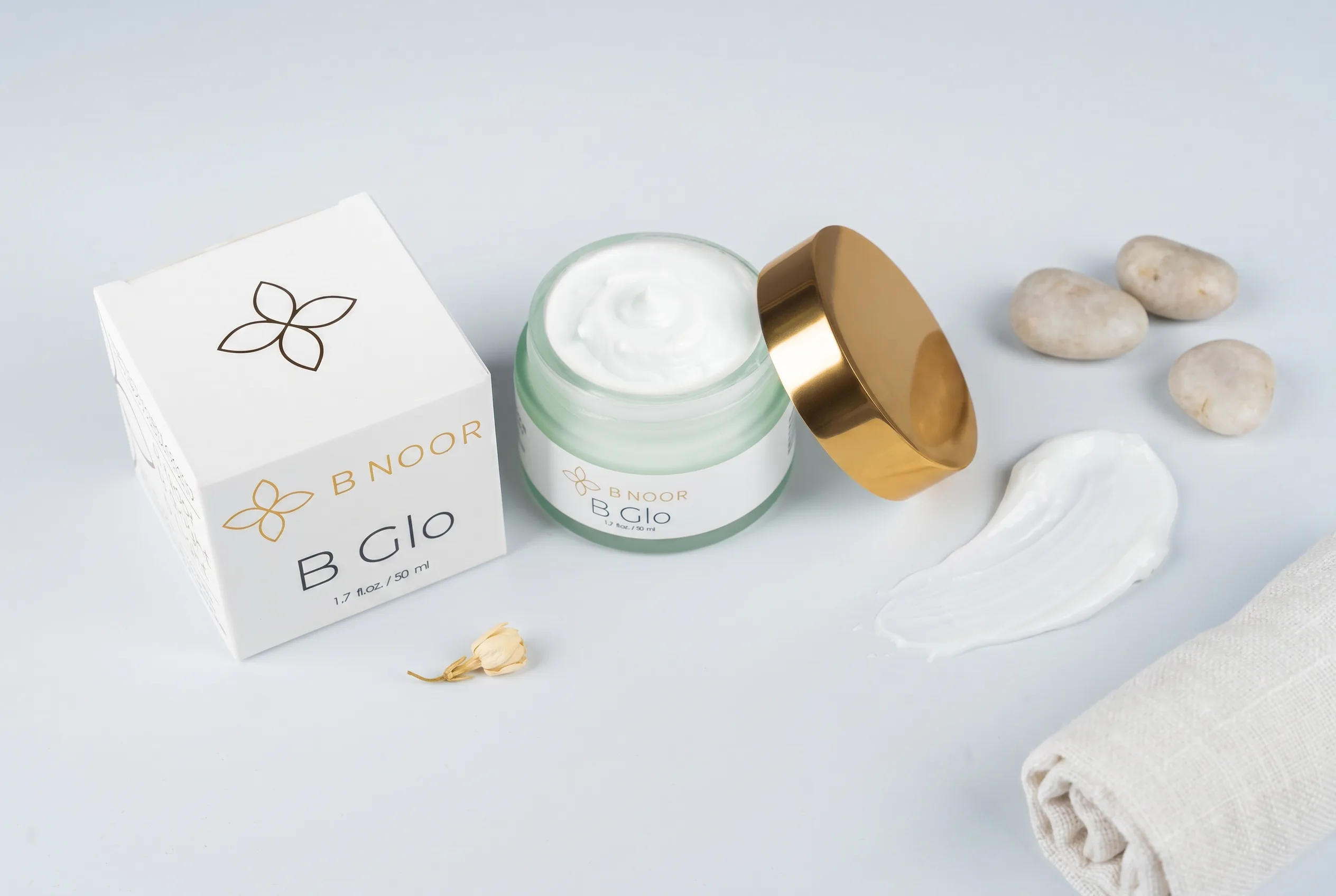
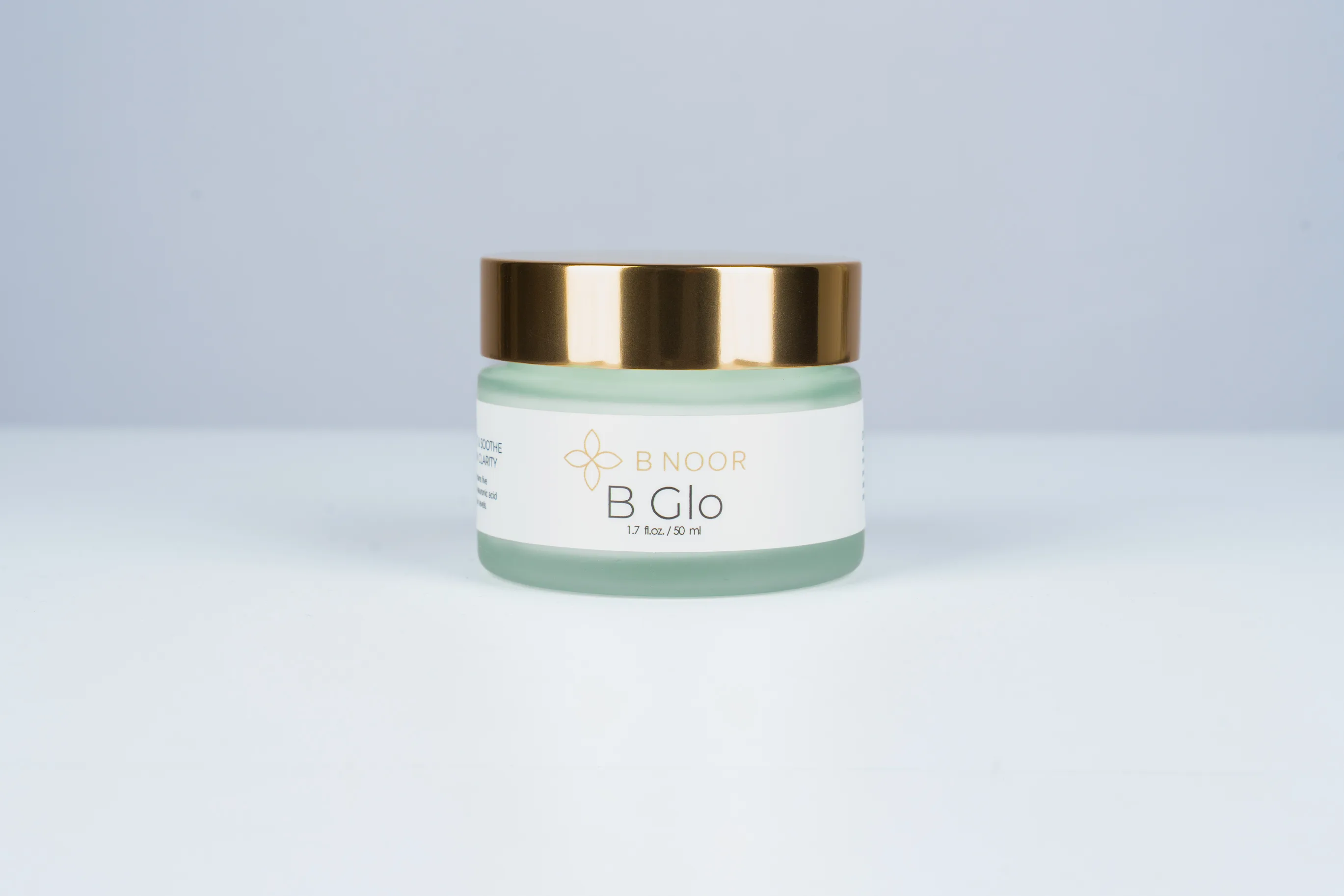
When formulating B Glo, the criteria were not "natural" or "clean" in the marketing sense. They were: is this ingredient safe at the intended concentration? Is there clinical evidence it does what we need it to do? Does it interact well with the other ingredients in the formula? Would I put this on my own skin without hesitation?
The result is a formula that contains both plant-derived and lab-synthesized ingredients — because both categories have ingredients that are excellent for skin when used correctly. The organic cloudberry, jojoba, and avocado oils are there because they are genuinely effective skin-barrier lipids. The HyloGlo™ HA Complex and niacinamide are there because the clinical evidence for their efficacy is among the strongest in skincare.
How to Read a Label That Actually Matters
Instead of looking for "natural" on the front of the package, look at the ingredient list on the back.
Ingredients are listed in descending order by concentration. The first five ingredients make up the majority of the formula — evaluate those first. Look for active ingredients you recognize (hyaluronic acid, niacinamide, vitamin C, retinol) at positions high enough in the list to be meaningful. Check for fragrance or essential oils if you have sensitive skin — these are the most common irritants in "natural" products.
A shorter ingredient list is not inherently better. A well-formulated complex formula can be more effective and gentler than a five-ingredient "clean" product. Judge by what is in the list, not how long it is.